
What I Learned About Pressure From 14 Years in Alaska
The storm wasn’t the problem

At 22, I drove 8,000 miles to Alaska with $1,500 and nothing left of the life I’d abandoned in South Florida
I’d lost three of my four jobs. I’d been kicked out of the music world. I’d been homeless, living in my car with a tarp over the broken sunroof. My soul had started to rattle, demanding I get the hell out of the life I’d built on unprocessed grief and borrowed dreams.
So I cashed out my 401(k), ate cold soup from cans I opened with a knife, and went to a remote island with no services. To go home in a way I’d never had a home before.
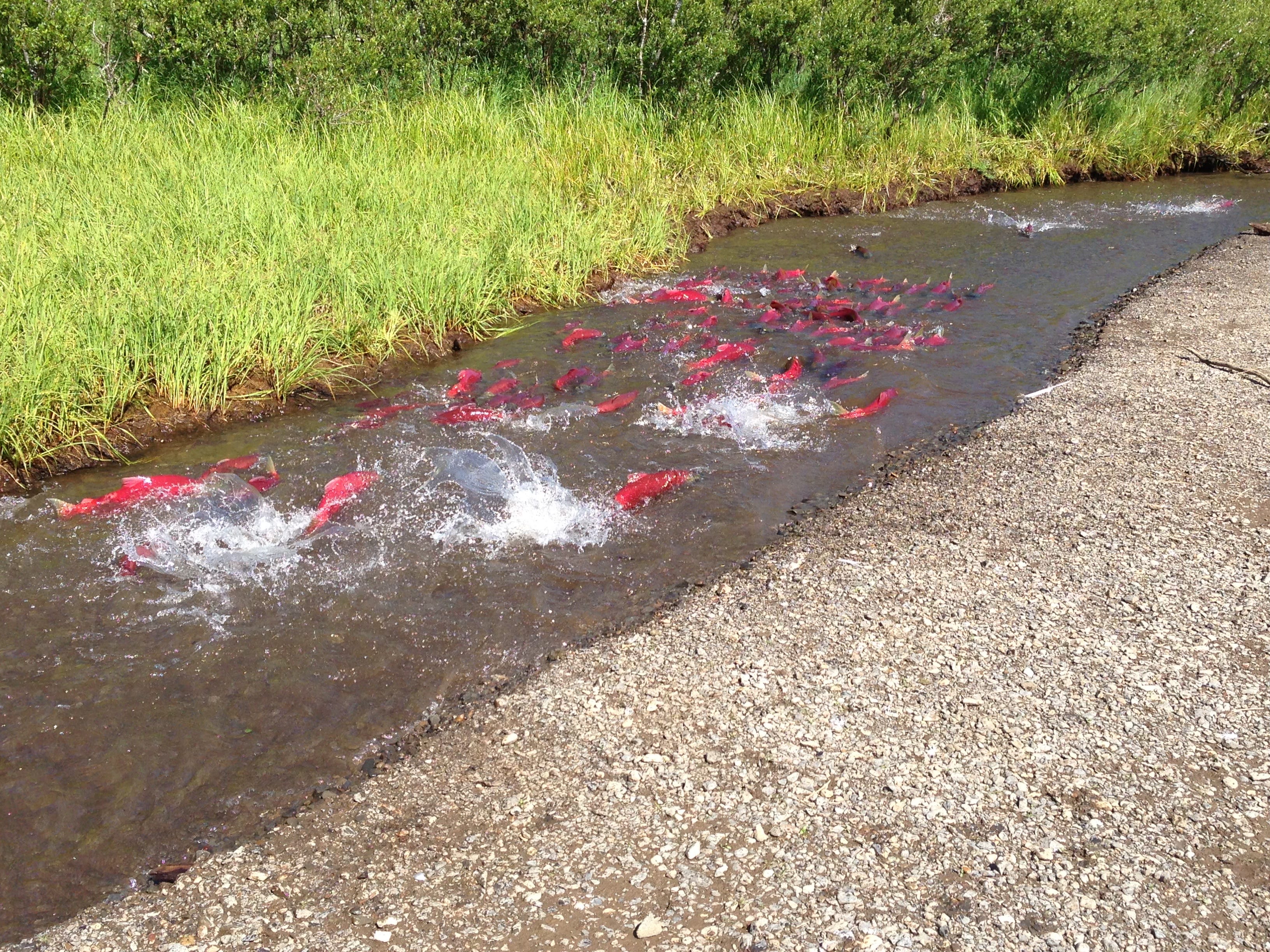
(photo: salmon going home. I fished on the ocean, so seeing them here was a rare privilege)
I thought commercial fishing would give me a break from the real world. A chance to learn something new. Connect to the land. Feel stronger, more capable. Maybe make some money.
What it actually taught me was humility.
And then it taught me humility again.
Fishing taught me that romantic adventure is only romantic in small moments and on paper. It taught me how to be aware of my body, how to move. How to pull anchors, pick fish from nets, build structures, work on boats in ways that respected knots, blades, wind, tide.
It taught me what mastery looked like—and that mastery at a craft could exist in a man alongside a complete lack of mastery in character and relationships.
It taught me how to sleep well and wake to the smallest sound. How to eat fast. How to shit in a bucket on deck. How to listen to my body when danger was present and not hold onto fear. How to combine speed with precision. How to access flow state when the moment demanded it.
It taught me how to be an asshole. How to condescend. And eventually, through watching what that did to others, how to stop.
We were fishing at the bluffs during a year when almost no one was catching. This might be our only good day all season.
Four of us on deck, swapping shackles back and forth as the tide pulled us out. Heavy nets. Each shackle took 20 to 45 minutes of hard labor to pick—imagine lifting 35 to 80 pounds over and over, working out the puzzle of how each fish is gilled in the net, sometimes my hands working two fish at once while tracking what the other crew members are doing, anticipating their next move, letting go when the drum comes up, picking up someone else’s abandoned puzzle when they can’t solve it.
Heart pounding. Wading through dead fish up to your kneecaps. Rolling in waves. The mesh flying over the stern as the skipper hits the jets. You can’t hesitate—if the mesh catches you, it pulls you overboard. You can’t miss the carabiner click because the boat’s already taking off, trusting your competence.
Under no circumstances does the leadline go over the corkline. You have to track what’s what when the pressure’s on. To mess it up means putting someone in danger.
This could go on for hours. As long as the fish were there or the tide held. You couldn’t take a break to piss. You learned to stay hydrated and fed in the chaos. You tuned into other people, into the situation. You stepped into teamwork, leadership, flow, absolute engagement.
This was one of a hundred situations where the pressure was high and the need to show up well was even higher.
I learned to love the weather. The wind. The dangerous aspects. I became drawn to those opportunities to center myself, to pull in the anchor by hand while waves knocked us about in a rainstorm at night.
That wasn’t what was costing me.
What was costing me was my ego. My thinking I was doing it right and everyone else had to do it my way. My inability to make small talk with the three people I lived with on a small boat for weeks at a time. I recoiled into myself, took really good care of myself, but others saw me as a diva.
I’d been trained through trauma. Screamed at. Had my food thrown overboard for not eating fast enough. Made to stand holding the leadline over my head for an hour after a 22-hour shift. I was trained by one of the best, highest-paid deckhands in Bristol Bay—and one very few people wanted to work with.
So I perpetuated that training. And because I was a fast fish picker and could mend web, people respected me. But it was out of fear.
When men get on the water, they change. The stress of everyone’s lives weighs on them. Words get short. Eyes focus. Coping strategies get amplified because we’re in a stressed nervous system state for weeks on end. Even when you’re sleeping, you’re “on.”
That’s what clicked for me. The awareness piece. What is my nervous system doing? What’s alive? What triggers are happening?
The most successful fishermen I knew were those who were devoted but held it lightly. When you work at your edge, sleep-deprived for weeks, multiple livelihoods and lives depending on your decisions, staying grounded to something becomes essential.
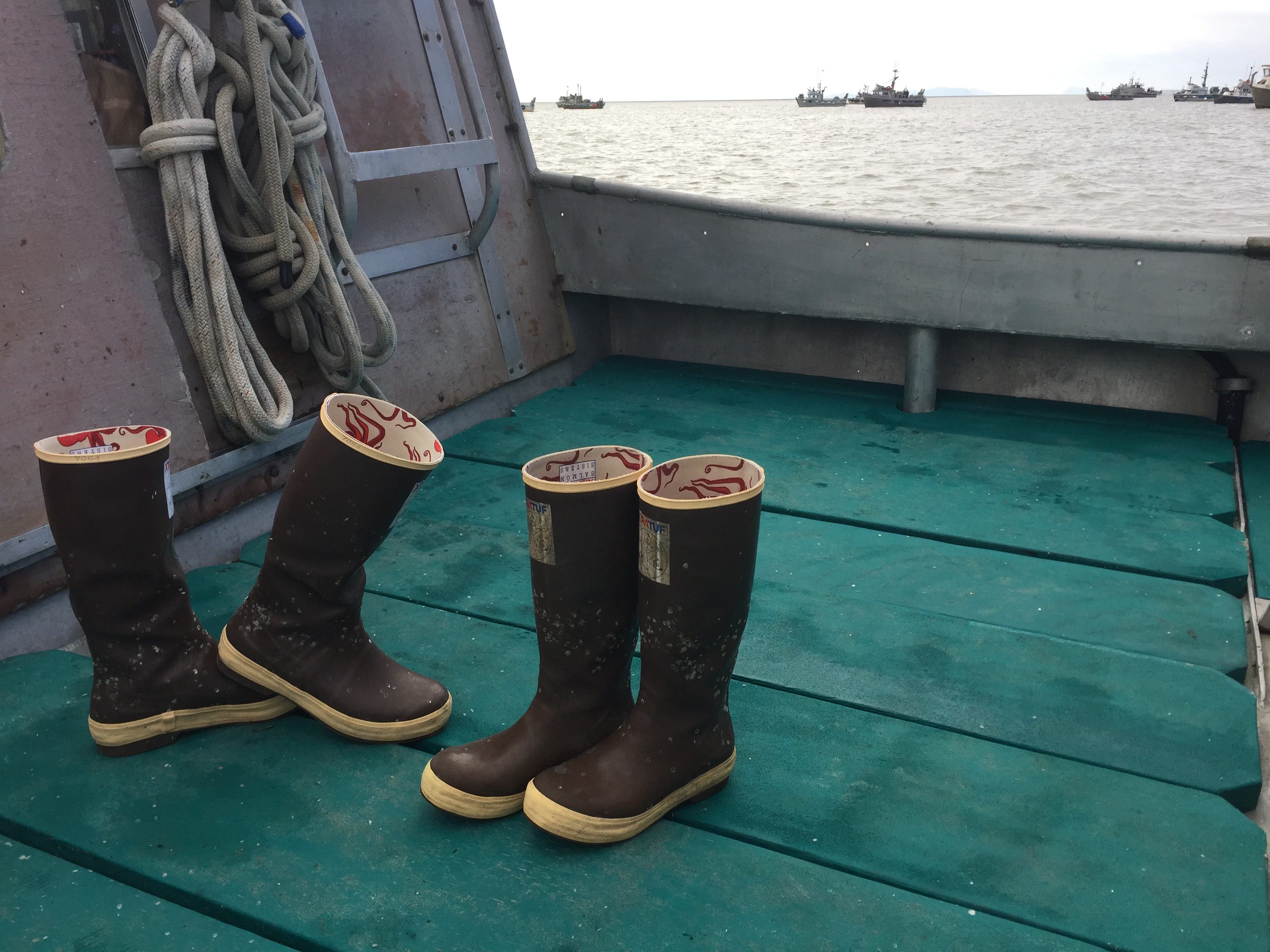
Not necessarily something that takes up time, but a visceral connection to something greater than this day, this season. Something that keeps you calm and light when it’s otherwise easy to complain or collapse.
After a long day of fishing, boats “anchor up.” We’d look for protected waters—behind a sandbar at low tide, near shore, sometimes up a creek when the weather was big.
When you’re anchored up, that’s the time to reset. To eat, brush teeth, decompress. Sometimes you’d anchor up with friends, barbecue some fish, enjoy the midnight sunset. Sleep was a weapon. When you’re well-rested, you’re more alert, capable, ready for anything.
For me, the Anchor Point became about finding that place—internal or external—that helps you connect, recharge, power up for hard moments. Something to reference when things get difficult.
A practice I developed: Stand in a way that feels good. Pay attention to the angle of your toes, follow that with your knees and hips. Arms at your sides. Chest up, core engaged but not over-inflated. Straight spine, relaxed shoulders. Soft eyeballs, soft jaw. Tongue on the roof of your mouth.
Do a body scan. Check for tension and stuckness. Breathe into it.
Practice this for ten minutes the first time. Lock it into your body memory. Then you can access it anytime—in the middle of a meeting, a fight with your partner, when your kid’s melting down while you’re trying to work.
It’s not a shield. It’s resting into what is solid within yourself, even as the tides change and waves crash over the gunwale. It’s bringing spaciousness into your own body and offering that to others.
This matters for any man who has any level of responsibility to show up for others. For men engaged with what’s happening in the world. Holding steady while everything quakes in outrage and reactivity.
The universal truth here: What doesn’t change is awareness. Attention. Creation. The earth. The felt sense of something greater, without all the middleground.
Anyone has a direct line to this in every moment. I’m simply encouraging men to strengthen that connection in service to their own lives, families, and communities.
The storm isn’t the problem. It never was.
Such evocative writing. I'm thrilled to have found this, and really looking forward to reading more.
What a great piece. I love the drama of your journey and the essence of what you learned along the way. I love the idea of finding what’s solid inside of you.